
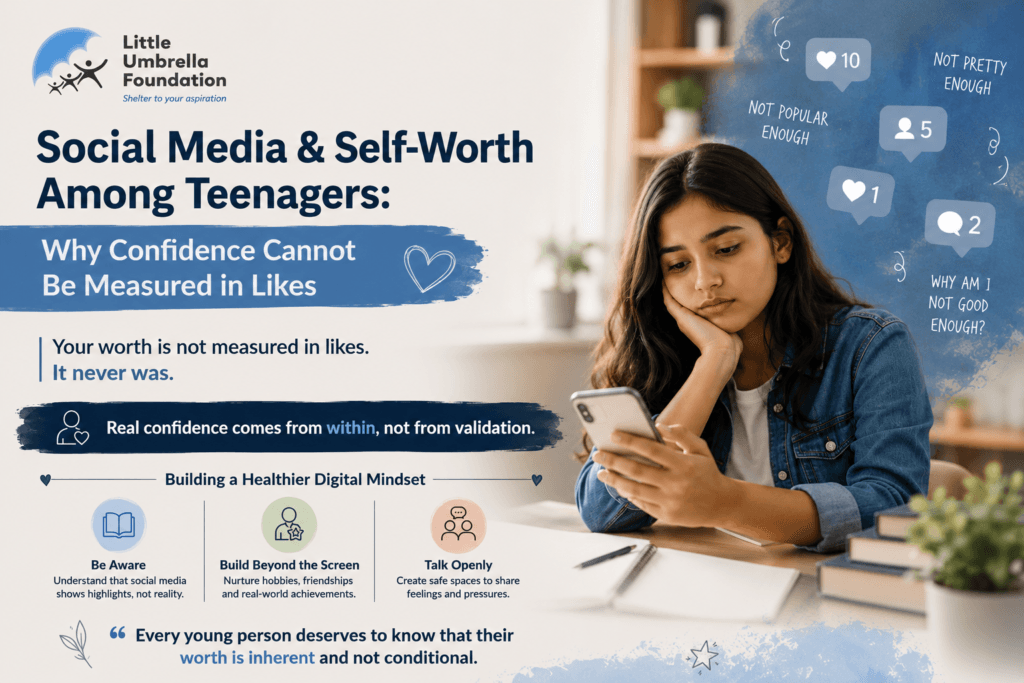
Teenage years are a defining period of self-discovery. It is when young people begin understanding who they are, what they value, and where they belong. In today’s world, much of that journey unfolds online, through social media feeds, followers, comments, and curated realities. At Little Umbrella Foundation, one growing concern we observe is how deeply social media influences teenage self-worth, highlighting the connection between social media and teenage self-worth. Many young people are beginning to measure their value through likes, validation, and online approval. But confidence should be built through support, growth, and genuine relationships and not algorithms.
How Social Media Shapes Self-Worth
For many teenagers, social media is more than entertainment. It is where identity, acceptance, and belonging are constantly negotiated.
Young people often find themselves:
– Comparing their lives to curated online realities
– Seeking validation through likes and followers
– Internalising unrealistic beauty and lifestyle standards
– Equating popularity with personal worth
At an age when confidence is still developing, these pressures can quietly shape how teenagers see themselves.
What We See at the Grassroots Level
At LUF, we witness firsthand how digital pressures affect young minds. Many teenagers, especially girls, begin doubting themselves not because of who they are, but because of who they think they should be. We meet students who question their intelligence because others appear more accomplished online. We meet teenagers who feel unattractive because they do not resemble the faces they constantly scroll past. We meet young people who tie their worth to digital attention. These struggles may seem invisible, but their emotional impact is real.
Rebuilding Confidence Beyond the Screen
At Little Umbrella Foundation, our work extends beyond education. We create spaces where children and teenagers feel seen, heard, and valued for who they truly are. Through mentorship and empowerment initiatives, we remind young people that:
– Their worth is not defined by appearance
– Their voice matters even if it is not the loudest online
– Their dreams remain valid regardless of comparison
– Their identity should be shaped by authenticity, not approval
When young people are supported without judgment, confidence begins to grow from within. For instance, authentic self-worth develops when teenagers learn the difference between social media influence and real teenage self-worth.
Encouraging Healthier Digital Habits
Building a healthier relationship with social media starts with awareness.
We encourage:
1. Digital Literacy
Helping teenagers understand that social media reflects curated highlights, not reality.
2. Offline Confidence Building
Encouraging hobbies, friendships, and achievements beyond the digital world.
3. Honest Conversations
Creating safe spaces for teenagers to talk openly about online pressures.
Worth Beyond Validation
Social media may shape modern adolescence, but it should never define it. At Little Umbrella Foundation, we believe every young person deserves to know that their worth is inherent and not conditional. No child should feel less valuable because they have fewer followers. No teenager should tie their identity to a number on a screen. Because real confidence is built in classrooms, conversations, mentorship, and communities rooted in empathy. Therefore, it is important to separate teenage self-worth from social media influence.
Their worth is not measured in likes. It never was.
References
– American Psychological Association. (2023). Social Media and Adolescent Mental Health.
– UNICEF. (2022). Children in a Digital World.
– Twenge, J. M. (2020). The Impact of Social Media on Adolescent Self-Esteem and Mental Health. Journal of Youth Studies.