
Development is not only about roads, rails, or revenue.
It is also about how people feel, cope, and heal.
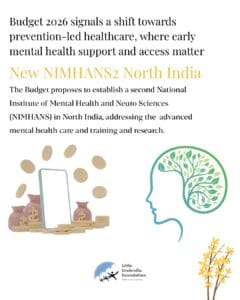
India’s Budget 2026 makes an important shift— by recognising mental health as national infrastructure, not a personal weakness.
At Little Umbrella Foundation, we see this as a step closer to the SDGs that truly matter.
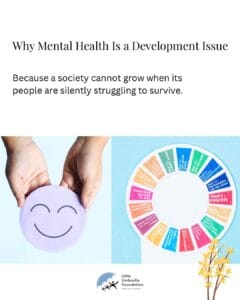
🧠 Mental Wellness = Sustainable Development Because a nation cannot grow sustainably if its people are:
• emotionally exhausted
• silently anxious
• mentally unsupported
⸻
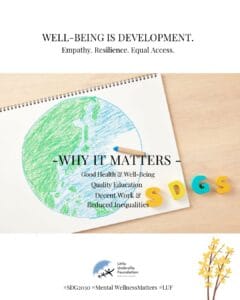 🔹 SDGs this move strengthens:
✅ SDG 3 – Good Health & Well-Being Mental health institutions, trauma care, and access matter.
✅ SDG 4 – Quality Education Mentally healthy minds learn, question, and lead better.
✅ SDG 5 – Gender Equality Women’s mental load finally enters policy conversations.
✅ SDG 8 – Decent Work & Economic Growth Wellbeing at work is productivity with dignity.
✅ SDG 10 – Reduced Inequalities Access to mental health care should not depend on privilege.
⸻
🌱 What LUF believes Mental wellness is not a luxury. It is the foundation of empathy, resilience, and social justice.
SDG 2030 will only be meaningful when: policies meet people, numbers meet narratives, and growth meets compassion.
This is a very insightful and much-needed perspective on building a strong mental wellness infrastructure in India. The article rightly highlights how mental health cannot be addressed in isolation and requires an integrated, system-level approach across policy, healthcare, education, and community awareness.
With a significant portion of India’s population being young and vulnerable to mental health challenges, creating accessible and inclusive support systems is crucial. Research also shows that mental well-being plays a foundational role in overall health and societal productivity, yet access to care remains limited and uneven across regions.
The emphasis on infrastructure, early intervention, and stigma reduction is especially important. Strengthening initiatives at the grassroots level—along with leveraging digital platforms and public health programs—can truly bridge the existing gaps.
A well-articulated piece that contributes meaningfully to the ongoing conversation around mental health in India. 👏