
Testimonials
Working with Little Umbrella Foundation has been a deeply meaningful experience that taught me the true value of empathy, patience, and social responsibility. Being able to contribute to the education and growth of children while learning from their resilience, honesty, and optimism made the journey incredibly rewarding. The experience not only strengthened my commitment to community service but also helped me grow personally by showing me the impact that compassion and support can have in shaping young lives.
– Anushna Mukherjee
Volunteer at Little Umbrella Foundation


I’ve been working with Little Umbrella Foundation for the last two months, and during that brief period, I’ve changed in a lot of ways. When I initially joined, I assumed I would only be assisting with activities or teaching kids. However, I gradually came to the realization that I am learning as much from them as they are from me.
I am now more understanding, appreciative, and patient because of the kids. I am greatly inspired by their innocence, curiosity, and will to learn despite having few resources. Every tiny increase in their self-assurance, ability to communicate, or grin feels like a significant accomplishment.
For me, LUF is more than simply an NGO, it’s a place where genuine change starts at the local level. The group is committed, encouraging, and truly interested in the development of every child. Along with academic learning, the setting fosters the development of values, confidence, and life skills.
I’ve grown emotionally and personally over the past two months. Being a part of an organization that genuinely strives to improve the lives of children makes me proud. I am appreciative of this chance and eager to make more contributions in the future.
By Akansha Singh
Volunteer at Little Umbrella Foundation
Being able to be a part of LUF and working at the Saket Centre definitely changed the way I looked at social work. But what got me was how quickly the children trusted us. Within days they were pulling us into their world, showing us their drawings, singing, and laughing like we’d always been there. This has been possible because of Prity ma’am, who has spent years building the center as a place where children feel comfortable enough to do so. At Law Schools we are trained to read, argue and analyze. LUF taught me the one thing law school doesn’t put on the syllabus: empathy and how to actually listen to the person in front of you. These memories will stay with me longer than most things I’ve studied. I would like to thank Prity ma’am, the Director of LUF, and Anusuya ma’am for letting me into a space that gave back far more than I brought.
Kausik Mohanty
Volunteer at Little Umbrella Foundation


As a first-year law student, the conventional choice for my mandatory Service Learning Internship might have been a quiet desk assignment or a corporate research office. But as I sat down to choose where to complete this required module, a persistent thought stopped me: if I spent my entire formative journey looking only at high-level legal theory, I would lose sight of the ground entirely. The finest legal minds are not those who analyze policy in isolation, but those who understand what happens when a system fails a real person on the street. That conviction led me directly to the Little Umbrella Foundation (LUF). I didn’t want this internship to merely be a degree requirement to tick off; I wanted an experience that would force me to confront the human element that the law is ultimately meant to protect.
What followed at LUF was one of the most intense, demanding, and genuinely fulfilling months of my education. Alongside my co-intern Anviksha, and under the extraordinary guidance of Project Director Anusuya Sarma and Director Prity Banerjee, I was given the opportunity to co-lead a child development workshop initiative under LUF’s Young Changemakers Series. Our project was titled “The First 1000 Days Building a Healthy Tomorrow.” The mission was to design and execute a comprehensive, bilingual Hindi-English awareness workshop for children from underserved communities, focusing on the critical importance of nutrition during the first thousand days of life from conception to age two a window that irreversibly shapes a child’s neurological development, cognitive capacity, and lifelong health.
To make the session truly meaningful, I had to completely shift gears. I was no longer writing a paper for a professor or analyzing statutory codes; I was designing a live, interactive curriculum for real children. I coordinated directly with a guest nutritionist to ensure the medical content was rigorous, while simultaneously developing interactive elements polls, an educational nutrition game, and scenario-based discussions to keep young minds engaged. Alongside the workshop, I contributed to LUF’s editorial strategy by authoring a five-article blog series targeting institutional donors, CSR partners, and policy stakeholders. These pieces bridged legal mechanics with social realities, covering topics from the legal enforcement of nutritional rights under the National Food Security Act (NFSA) 2013 and mental health policy translation, to corporate CSR partnerships and restorative justice under the Bharatiya Nyaya Sanhita (BNS) 2023.
Yet beyond the research and planning, the absolute emotional heart of this experience was the time spent with the children themselves. Walking into the session on June 28th, I was not entirely sure what to expect. What I found was a vibrant room alive with twenty-five curious, energetic children. What made the experience truly unforgettable was how incredibly rewarding and joyful it felt to interact with them directly. Within minutes, any barrier broke down as they raised their hands, laughed through the nutrition games, and actively took ownership of the conversation. The moment I will carry with me forever occurred mid-session, when a young child raised their hand to ask a simple, earnest question about protein what it was, why it mattered, and where they could find it in their daily meals. In that moment, everything crystallized. This child was not asking because a curriculum mandated it; they were asking because genuine curiosity about their own health had been ignited. For someone training to work in complex legal frameworks, stripping away every layer of professional jargon to connect so openly and warmly with these children was deeply humbling. Standing at the front of that room gave me a sense of purpose no corporate desk could replicate.
Working at LUF also taught me the true value of exceptional mentorship. Anusuya Sarma Ma’am’s patient, detailed feedback pushed us to weave real-life narratives into our content, teaching me to design for the audience rather than my own intellectual comfort. Equally, Prity Banerjee Ma’am’s visionary leadership elevated our modest community proposal into a full-scale research initiative with the potential to be submitted to the Ministry of Health and Family Welfare. To be trusted with that level of institutional responsibility as a first-year student completing his Service Learning module was deeply humbling.
Looking back, completing my Service Learning Internship at LUF permanently altered how I view the law. The NFSA guarantees food security on paper, but a child still goes hungry if their community lacks the legal awareness to demand what the law promises. That gap between law as written and law as lived is something I will carry into every regulatory framework I ever draft or analyze. I am profoundly grateful to Prity Ma’am, Anusuya Ma’am, Anviksha, and the entire LUF team. To any law or social work student considering an NGO internship: do it. It will build empathy, strip away your assumptions, and remind you that the law is only as powerful as the care we bring to the people it serves.
My internship at Little Umbrella Foundation was an excellent and enriching learning experience. It provided me with valuable practical exposure in the fields of counselling and art therapy, allowing me to apply theoretical knowledge while making a meaningful impact. Working with children through counselling sessions and creative art therapy activities helped me develop essential professional skills such as empathy, active listening, communication, patience, and confidence.
I am especially grateful to Prity Ma’am and Anusuya Ma’am for their constant guidance, encouragement, and support throughout my internship. They were always approachable, patient, and willing to share their knowledge, making the entire learning journey smooth and inspiring.
I sincerely thank the Little Umbrella Foundation for giving me the opportunity to learn, grow, and contribute. This internship has strengthened my passion for counselling, art therapy, and child development, and I will always cherish the knowledge, skills, and experience I gained here.
Pranjal Yadav
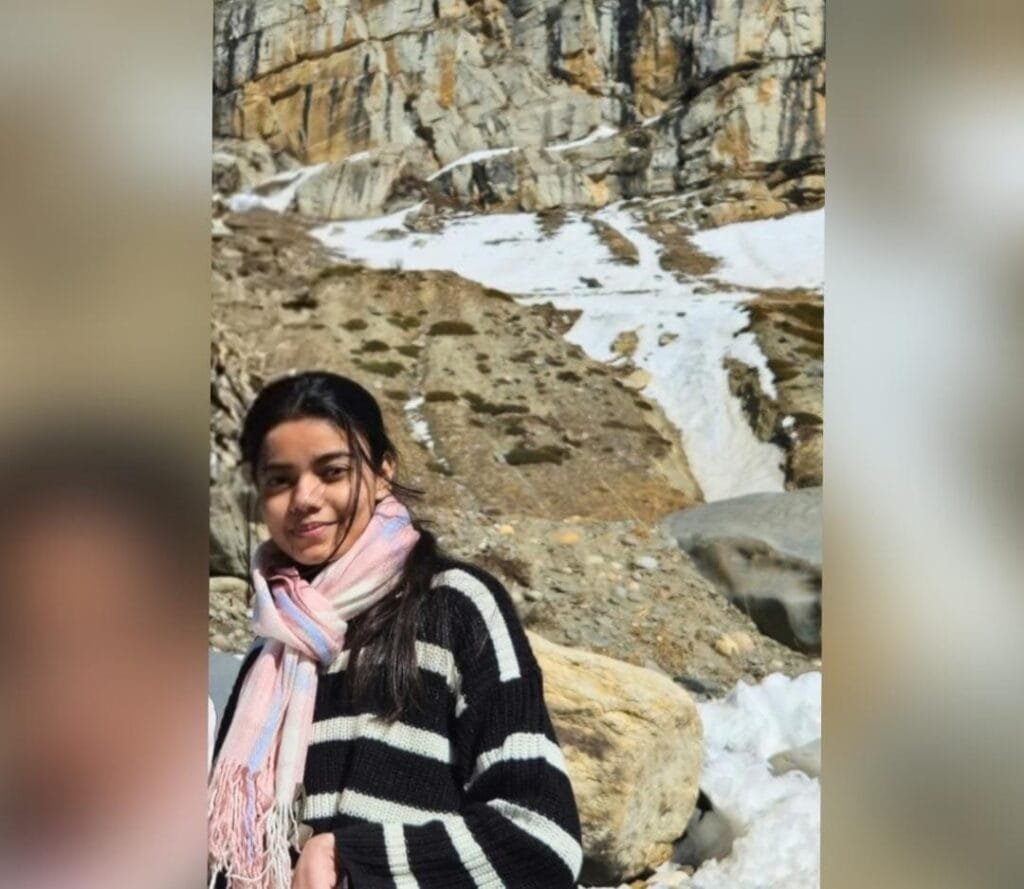

My time at the Little Umbrella Foundation was incredibly transformative. What began as an internship focused on grant acquisition quickly evolved into a leadership role that allowed me to directly empower underserved children. Co-facilitating an online financial literacy workshop was the highlight of my tenure, showing me the real-world impact of LUF’s mission. I am deeply grateful to Project Director Ms. Anusuya Sarma and Founder Ms. Prity Banerjee for their support, and for the opportunity to grow as a leader while contributing to such a vital cause.”
— Varchas Jakkaraju
My internship at Little Umbrella Foundation was an excellent and enriching learning experience. It provided me with valuable practical exposure in the fields of counselling and art therapy, allowing me to apply theoretical knowledge while making a meaningful impact. Working with children through counselling sessions and creative art therapy activities helped me develop essential professional skills such as empathy, active listening, communication, patience, and confidence.
I am especially grateful to Prity Ma’am and Anusuya Ma’am for their constant guidance, encouragement, and support throughout my internship. They were always approachable, patient, and willing to share their knowledge, making the entire learning journey smooth and inspiring.
I sincerely thank the Little Umbrella Foundation for giving me the opportunity to learn, grow, and contribute. This internship has strengthened my passion for counselling, art therapy, and child development, and I will always cherish the knowledge, skills, and experience I gained here.
Pranjal Yadav